- Mon - Fri: 9:30 am - 05:00pm / Closed on Weekends

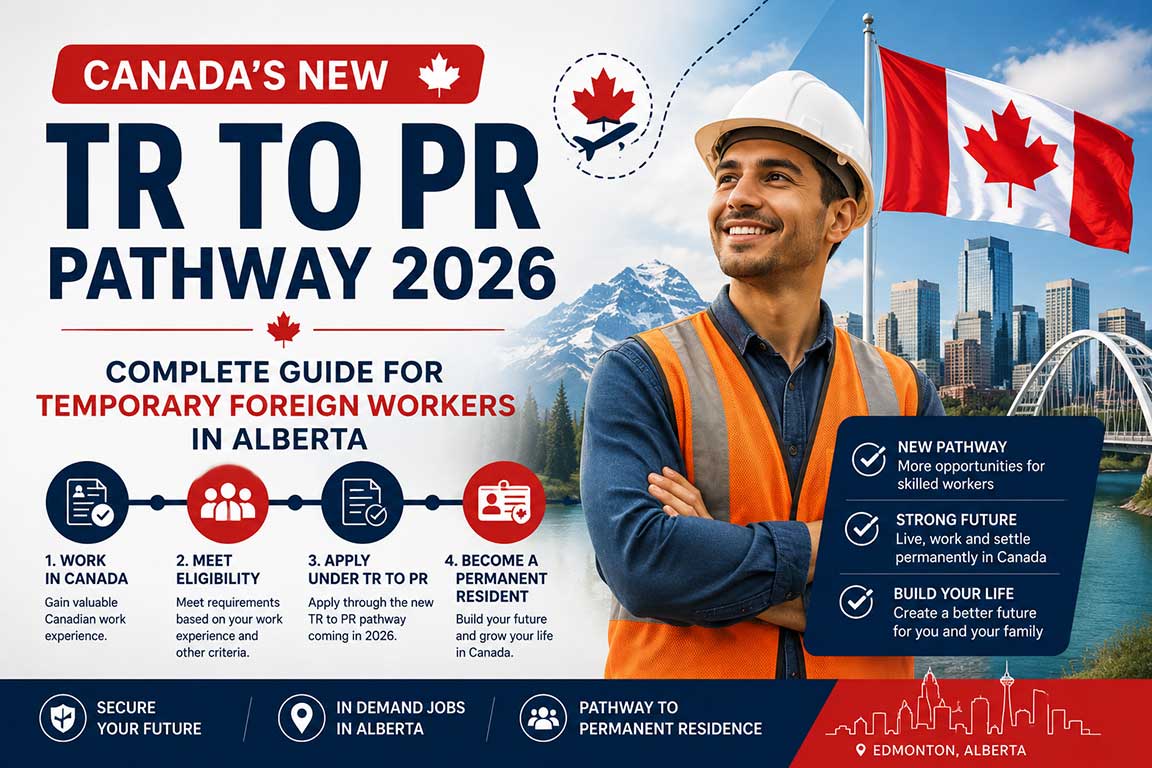
Canada is preparing to expand immigration opportunities through a new Temporary Resident to Permanent Resident (TR to PR) pathway in 2026. This upcoming program is expected to create major opportunities for temporary foreign workers, international graduates, and individuals already contributing to Canada’s workforce.
For workers currently living in Alberta, especially in Edmonton and surrounding areas, this pathway may become one of the most practical routes toward permanent residence.
As labour shortages continue across multiple industries, Canada is increasingly prioritizing candidates who already have Canadian work experience and are actively contributing to the economy. This makes temporary residents one of the strongest groups for future immigration selection.
This guide explains everything currently known about the new TR to PR pathway, who may qualify, and how applicants in Alberta can prepare strategically.
The Temporary Resident to Permanent Resident pathway is designed to help eligible temporary residents transition into permanent residents of Canada.
The federal government has indicated that the new pathway will target workers who are already integrated into the Canadian labour market. Unlike many overseas immigration programs, this pathway focuses on individuals already living and working in Canada.
The government’s goal is to retain workers who are helping address labour shortages across Canada.
Alberta continues to face strong labour shortages across several sectors, making the province one of the strongest candidates for future TR to PR opportunities.
Edmonton and surrounding regions are experiencing growing demand for skilled workers in industries such as construction, healthcare, transportation, hospitality, and manufacturing.
Applicants already working in Alberta may have a stronger chance of qualifying because they are contributing directly to the provincial economy.
Although the government has not released complete eligibility criteria yet, immigration trends strongly suggest that several factors will play an important role.
Candidates with strong employment histories in Alberta are expected to be highly competitive.
Many immigration experts also believe that candidates already living in smaller Alberta communities may receive additional priority.
Canada increasingly depends on temporary foreign workers to fill labour shortages.
Industries across Alberta continue struggling to find enough workers locally. Because of this, the government may prioritize workers who already have experience in Canada and are successfully integrated into the workforce.
Workers in these sectors may become key targets under future immigration selection programs.
Many applicants wait until programs officially open before preparing. This often leads to rushed applications, missing documents, and reduced eligibility.
Preparing early can significantly improve your chances.
Planning ahead is critical because immigration programs often fill quickly once applications open.
The Alberta Advantage Immigration Program (AAIP) may continue playing an important role alongside federal TR to PR initiatives.
Candidates who already qualify under Alberta streams may benefit from multiple immigration opportunities simultaneously.
Combining federal and provincial pathways can significantly improve your chances of obtaining permanent residence.
The new TR to PR pathway is expected to become highly competitive once officially launched.
Working with a professional immigration consultant can help applicants avoid mistakes and prepare strategically before the program opens.
At CanDream Immigration, we help temporary residents in Edmonton and surrounding areas understand their eligibility and build stronger immigration profiles.
As a trusted immigration consultant in Edmonton AB, our goal is to help applicants maximize their opportunities under Canada’s evolving immigration system.
Canada’s immigration system increasingly rewards candidates who already have Canadian work experience.
The government recognizes that temporary residents already understand Canadian workplace culture, taxation systems, and community integration.
This shift is one reason why temporary foreign workers may become a major focus of future PR pathways.
Many temporary residents lose immigration opportunities because of avoidable mistakes.
Strategic preparation is essential to avoid these problems before new pathways open.
If you are currently working in Alberta and planning for permanent residence, now is the best time to prepare for upcoming immigration pathways.
CanDream Immigration in Edmonton provides professional guidance for workers, international graduates, and temporary residents who want to build a long-term future in Canada.
Book your immigration consultation today to discuss your options for Canada’s upcoming TR to PR pathway.
Canada’s new TR to PR pathway in 2026 may become one of the biggest immigration opportunities for temporary foreign workers already living in Alberta.
Applicants who prepare early, gain strong Canadian work experience, and align with labour market priorities will likely have the strongest chance of success.
With proper planning and guidance from a licensed immigration consultant in Edmonton, temporary residents can position themselves strategically for permanent residence in Canada.