- Mon - Fri: 9:30 am - 05:00pm / Closed on Weekends

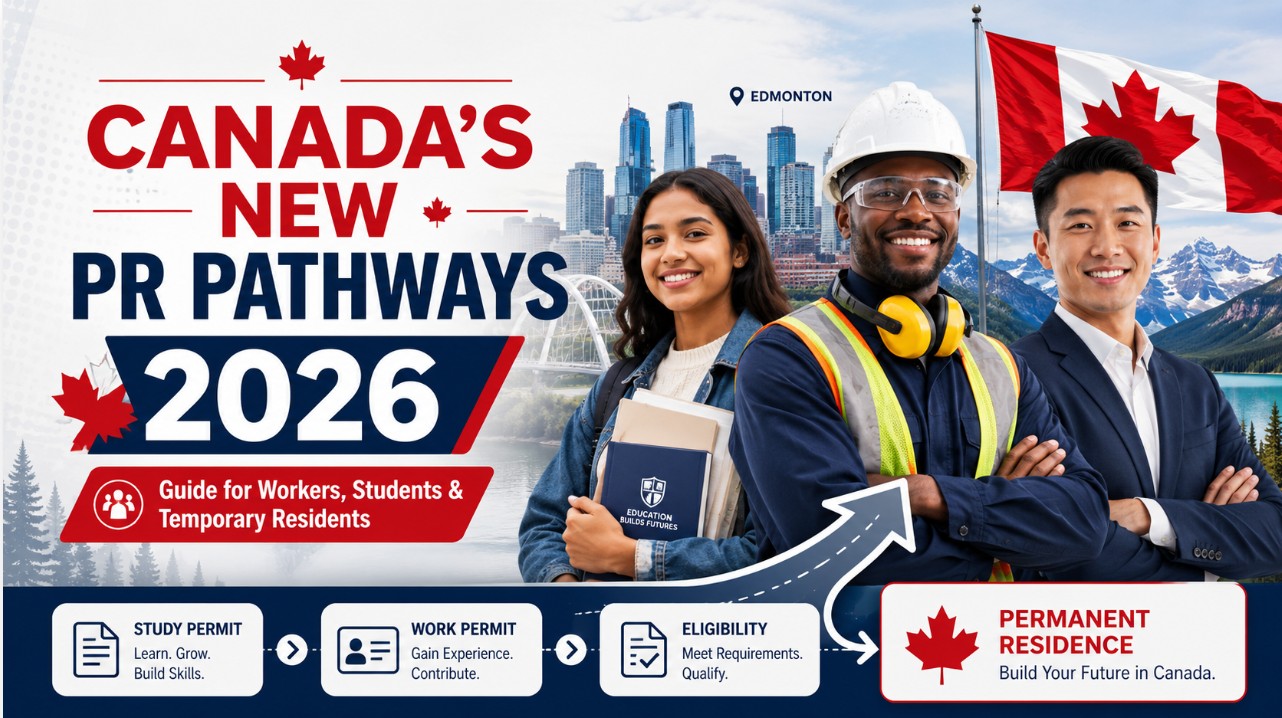
Canada’s immigration system is changing in 2026, and many applicants are now asking the same important question: What is the best pathway to permanent residence in Canada this year?
For workers, international students, temporary residents, and families already living in Canada, 2026 may bring new opportunities. Canada is focusing more on applicants who are already contributing to the economy, working in high-demand occupations, living in Canadian communities, and helping fill labour shortages.
This shift is especially important for applicants in Alberta, including Edmonton, Sherwood Park, St. Albert, Leduc, Beaumont, Fort Saskatchewan, Spruce Grove, and nearby areas. Alberta continues to need workers in healthcare, technology, construction, manufacturing, aviation, agriculture, transportation, and rural communities.
This complete guide explains Canada’s new and updated permanent residence pathways in 2026, who may benefit, and how applicants can prepare a strong immigration strategy.
Canada is adjusting its immigration strategy to better balance permanent residence targets, temporary resident levels, and labour market needs. Instead of focusing only on bringing new applicants from outside Canada, the government is placing more attention on people who are already living, studying, and working in Canada.
This matters because many temporary residents have already built strong ties to Canadian communities. They are paying taxes, working for Canadian employers, supporting local businesses, and contributing to the economy. For these applicants, a pathway to permanent residence can provide long-term stability and help Canada retain skilled talent.
Applicants who are already in Canada may have an advantage if they can show strong employment history, valid status, language ability, and community ties. This is especially relevant for:
For CanDream Immigration clients in Edmonton and Alberta, this creates a valuable opportunity to plan early and identify the most suitable PR pathway before programs become more competitive.
One of the biggest immigration updates for 2026 is Canada’s plan to transition up to 33,000 skilled temporary workers to permanent residence over 2026 and 2027. This initiative is designed to help workers who are already contributing to Canada and who may be employed in specific in-demand sectors.
This is not a general automatic PR program for every temporary resident. Applicants will still need to meet eligibility requirements, maintain valid status, provide proper documentation, and show that they qualify under the program or pathway available to them.
While final program details can vary depending on IRCC instructions, the strongest potential candidates may include:
This is why early preparation is critical. Many applicants wait until a program opens before collecting documents, but by then, the intake may become highly competitive.
Express Entry continues to be one of Canada’s most important permanent residence systems. In 2026, category-based selection is especially important because IRCC can invite candidates based on specific labour market needs instead of relying only on high CRS scores.
This creates opportunities for candidates who may not have the highest CRS score but have experience in priority fields. Applicants with French-language ability, healthcare experience, STEM experience, trades experience, education experience, transport experience, or other targeted experience may have stronger chances.
Current Express Entry category-based selection includes areas such as:
For applicants in Alberta, Express Entry can become even stronger when combined with a provincial nomination. A nomination through a PNP can add significant CRS points and greatly improve the chance of receiving an invitation to apply.
Alberta remains one of the most attractive provinces for immigrants because of its growing economy, job opportunities, and demand for skilled workers. The Alberta Advantage Immigration Program, also known as AAIP, continues to play a major role in helping eligible applicants move toward permanent residence.
In 2026, Alberta is prioritizing key sectors such as healthcare, technology, construction, manufacturing, aviation, agriculture, and Rural Renewal communities. This is important for applicants who are already working in Alberta or planning to build their future in the province.
Applicants working in the following sectors may have stronger opportunities under Alberta-focused immigration planning:
Alberta’s approach is practical. The province wants to retain people who can support its economy and fill real labour shortages. For temporary workers and international graduates in Edmonton, this means choosing the right job and pathway can make a major difference.
Temporary foreign workers may be among the biggest beneficiaries of Canada’s 2026 immigration direction. Workers who are already employed in Canada have a strong advantage because they can show Canadian work experience, employer support, and labour market integration.
However, not every job automatically leads to permanent residence. Applicants must understand whether their occupation, work experience, language score, and immigration status support a PR application.
Temporary workers may qualify through:
Workers should keep employment records, pay stubs, reference letters, job duties, NOC/TEER classification, and work permit documents organized. These documents can become essential when applying for PR.
International students continue to be an important part of Canada’s immigration future. Students who graduate from eligible Canadian institutions and obtain a Post-Graduation Work Permit can build Canadian work experience and later apply for permanent residence.
In Alberta, students who study and work locally may have additional opportunities through AAIP or Express Entry. The key is to choose the right program, gain skilled work experience, and avoid waiting too long before planning for PR.
International students should focus on:
A student’s PR success often depends on decisions made before graduation. Program selection, job choice, and timing can all affect eligibility.
French-language ability remains one of the strongest advantages in Canada’s immigration system. Francophone applicants may benefit from Express Entry category-based selection, Francophone mobility work permits, and federal efforts to support French-speaking communities outside Quebec.
For applicants in Alberta, French ability can provide a competitive edge. Even candidates who are not fully bilingual may benefit from improving French scores if they are serious about permanent residence.
French-language ability may help applicants by:
Applicants who combine Canadian education, Canadian work experience, Alberta employment, and French ability may become highly competitive.
The biggest mistake many applicants make is waiting too long to prepare. Immigration programs can change quickly, and some pathways may open for a limited time. Applicants who already have their documents ready can respond faster when opportunities appear.
A strong PR strategy should begin before a work permit expires, before a PGWP runs out, and before an applicant loses eligibility due to age, work history, or documentation gaps.
Applicants should prepare:
Proper planning can prevent delays, refusals, and missed opportunities.
Canada’s immigration system is competitive, and small mistakes can lead to major problems. Many applicants lose opportunities because they misunderstand eligibility, choose the wrong pathway, or submit incomplete documents.
A strong application is not just about meeting minimum requirements. It must be accurate, complete, consistent, and aligned with the correct immigration stream.
Applicants should avoid:
Professional guidance can help applicants avoid these problems and choose the best pathway based on their profile.
CanDream Immigration helps clients in Edmonton, Alberta, and surrounding areas understand their immigration options and prepare stronger applications. Whether you are a temporary foreign worker, international student, PGWP holder, or skilled worker, your pathway should be planned carefully.
Every immigration profile is different. The right option depends on your education, work experience, occupation, language score, status, family situation, and long-term goals.
CanDream Immigration can assist with:
If you are unsure which pathway is right for you, a professional consultation can help you understand your next steps clearly.
The best pathway depends on your profile. Express Entry, Provincial Nominee Programs, Alberta PNP, Canadian Experience Class, and new temporary worker to PR initiatives may all be options depending on your work experience, language score, occupation, and location.
Yes, many temporary workers in Alberta may qualify for PR through Express Entry, Alberta PNP, employer-supported pathways, or future temporary worker to PR initiatives, depending on eligibility.
International students may become eligible after completing studies, obtaining a PGWP, gaining skilled Canadian work experience, and meeting language and program requirements.
Yes. French-language ability can improve Express Entry competitiveness and may help candidates qualify through French-targeted category-based selection.
Yes. A licensed immigration consultant in Edmonton can assess your profile, identify suitable PR pathways, help prepare documents, and reduce the risk of application mistakes.